IEEE Harmonics Benchmark Model
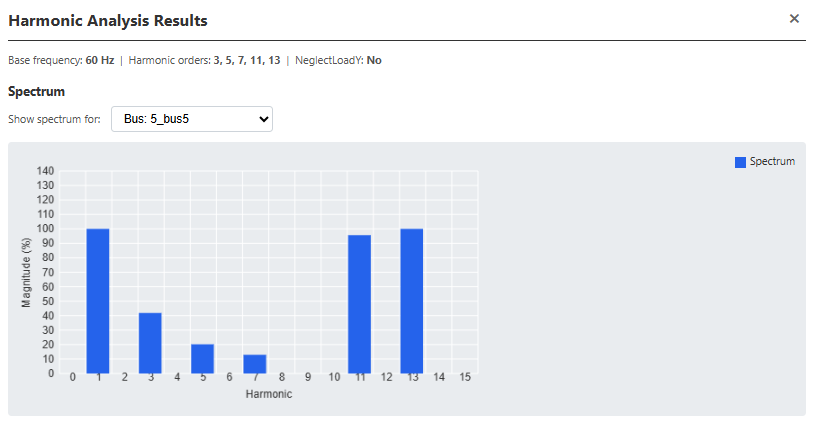
OpenDSS harmonic analysis benchmark with TCR and HVDC loads, tuned filters, and reference THD results from IEEE PES GM 2024.
Read MoreElectrisim is open-source software for power system analysis—free when you run it locally, with a small fee for cloud-hosted use. You draw a single-line diagram in the browser, set parameters in dialogs, and run studies from the Simulate menu. Nothing needs to be installed for the cloud app, and you do not need to write scripts to get results on the diagram.
Last updated October 2026 · covers Electrisim 1.21
Build a two-bus network and run your first load flow.
Load flow, short circuit, arc flash, harmonics, OPF, dynamics and more.
Parameters for buses, lines, transformers, generators, storage and controls.
Start from IEEE, CIGRE, wind, solar and transmission networks.
Bring in a pandapower .py script or an OpenDSS .dss file.
Watch the workflows step by step.
This page is the in-app reference. Start with First Steps if you are new, then pick a study under Simulation. Parameter tables for each network element are in Elements. Downloadable example networks and validation articles are under Resources.
Prefer a video walkthrough? See the Tutorials page. Technical solver options that Electrisim does not expose are in the engine documentation at the end of this page.
Build a tiny network, run load flow, and read voltages on the diagram. That is the loop you will reuse for every other study.
vn_kv) on each, for example 20 kV.Every study starts from the toolbar Simulate button. Choose the analysis, set a few options, click Run. Results paint onto the diagram; most studies also open a results dialog.
You can draw and edit in the browser editor without signing up. Running studies in the cloud needs a subscription: from $10/month, cancel anytime, with a 30-day refund policy. Prefer to stay free? Run the open-source Community Edition on your own computer.
.py script or an OpenDSS .dss file.
Start from a template
Open a ready diagram: IEEE, PEGASE, and RTE cases, wind and PV plants, CIGRE, and tutorials.
Step-by-step videos and worked examples: Tutorials.
Click Simulate in the toolbar, pick a study, set the dialog options, and click Run. Results appear on the diagram and, for most studies, in a results window.
Confirm voltages, loadings, and what happens if equipment is out.
Fault levels, arc-flash incident energy, and device grading.
Need at least one synchronous Generator with dynamics data. Standalone overview: Transient stability guide.
Unbalanced feeders, DER, and harmonics. Use the OpenDSS tab or the dedicated Simulate entries.
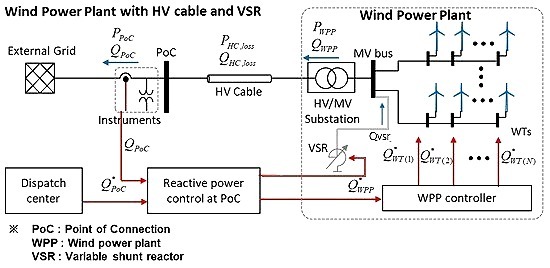
Reactive power and voltage capability at the point of connection.
Preliminary plant design, sizing, and dispatch from the same diagram.
Project cost and loss estimates from equipment on the diagram.
| Study | pandapower | OpenDSS | ANDES |
|---|---|---|---|
| Load Flow | Yes | Yes. Snapshot, Daily, Yearly, Dutycycle | No |
| Grid Code (P-Q) | Yes | No | No |
| Grid Code (V-Q) | Yes | No | No |
| Short Circuit | Yes. IEC 60909, ANSI/IEEE C37 (beta) | Yes. Fault study | No |
| Harmonic Analysis | No | Yes | No |
| Monte Carlo Load Flow | No | Yes. M1, M2, M3 | No |
| Optimal Power Flow | Yes | No | No |
| Time Series | Yes | No | No |
| Contingency | Yes | No | No |
| Protection Coordination | Yes | No | No |
| BESS Preliminary Design | Yes | No | No |
| Battery Sizing | Yes | No | No |
| BESS Dispatch Reversal | No | Yes. Optionally with OpenDER | No |
| Arc Flash (IEEE 1584) | Yes | No | No |
| Motor Starting | Yes. Steady-state | No | Yes. Dynamic |
| Transient Stability | No | No | Yes |
| Eigenvalue Analysis | No | No | Yes |
| Economic Analysis | Yes | No | No |
lightsim2grid speeds up eligible pandapower Newton-Raphson load flows above 150 buses (constant power, one slack, no FACTS or DC). See the lightsim2grid documentation and Large networks.
Tap and shunt control on Load Flow uses the pandapower Include controller checkboxes. Park Controller is pandapower-only and is not gated by those checkboxes. InvControl, RegControl, CapControl, and StorageController run with OpenDSS.
Engine references: pandapower, OpenDSS, ANDES transient stability, and ANDES eigenvalue analysis.
Electrisim is open source and under active development. Use the links below for the product roadmap, source code, and contact — this page is not a changelog.
You do not install these libraries locally. Electrisim calls them on the server (or in the packaged app) after you click Run.
You can export generated pandapower Python or OpenDSS commands from several study dialogs if you want to continue outside Electrisim.
Electrisim would not exist without pandapower, OpenDSS, ANDES, and draw.io, and the people who maintain them.
Download power system models and explore articles on modeling, simulating and analyzing electrical power systems.
You can download models below to be used in the Electrisim open-source software. Ready-made diagrams inside the app, including the transmission test cases and the pandapower CIGRE, Oberrhein, and low-voltage benchmarks, are listed under Diagram templates.
OpenDSS harmonic analysis benchmark with TCR and HVDC loads, tuned filters, and reference THD results from IEEE PES GM 2024.
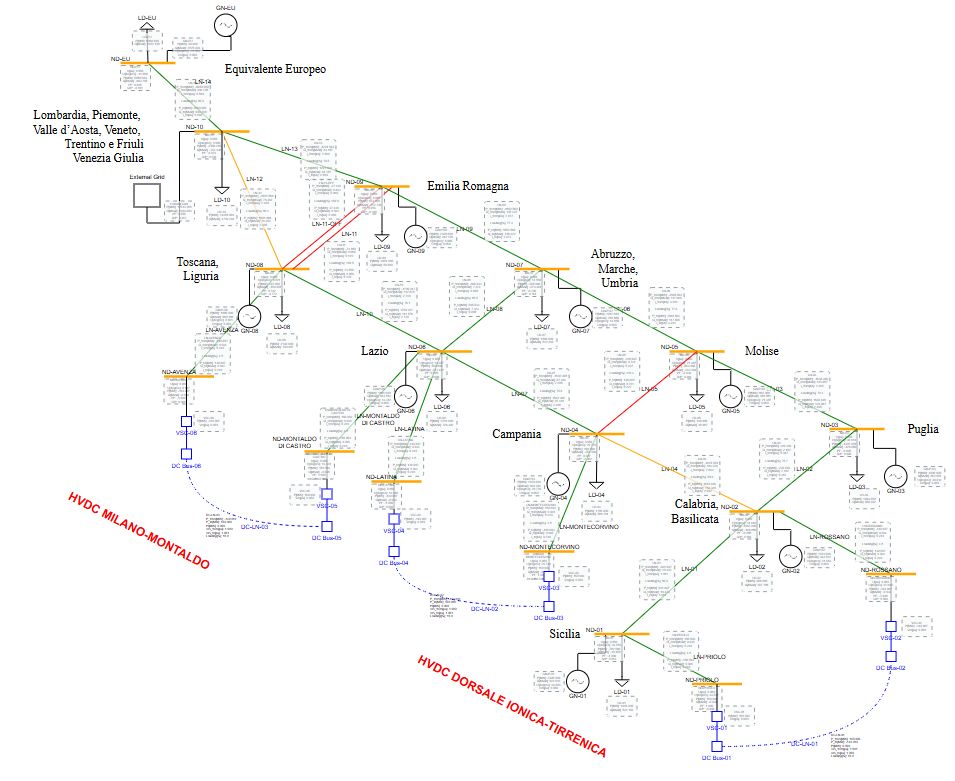
Read More10-bus model of the Italian transmission network with HVDC integration (Terna Hypergrid project). Based on Antonino Patti thesis, Università di Palermo; validated with Neplan, implemented with pandapower.
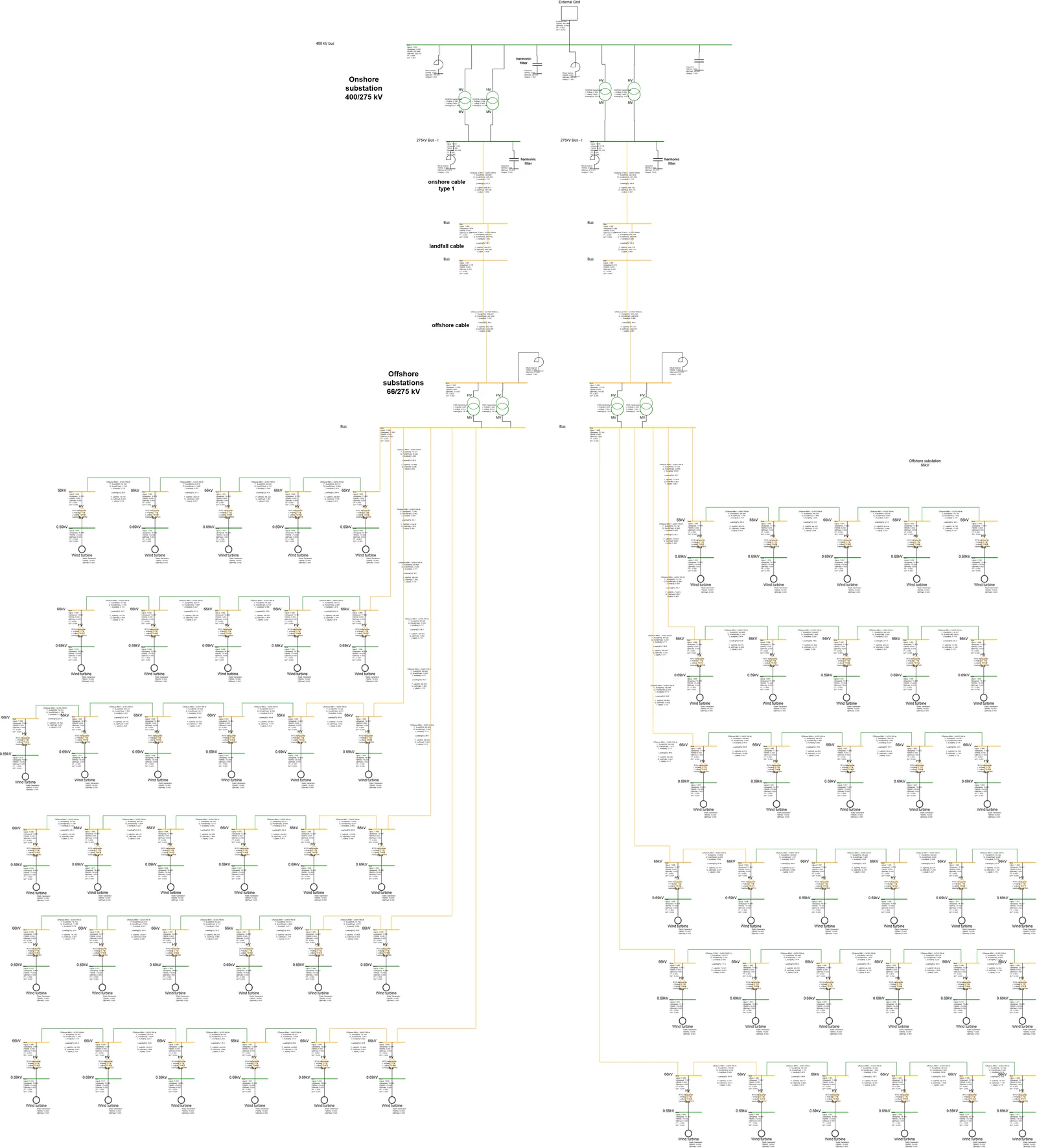
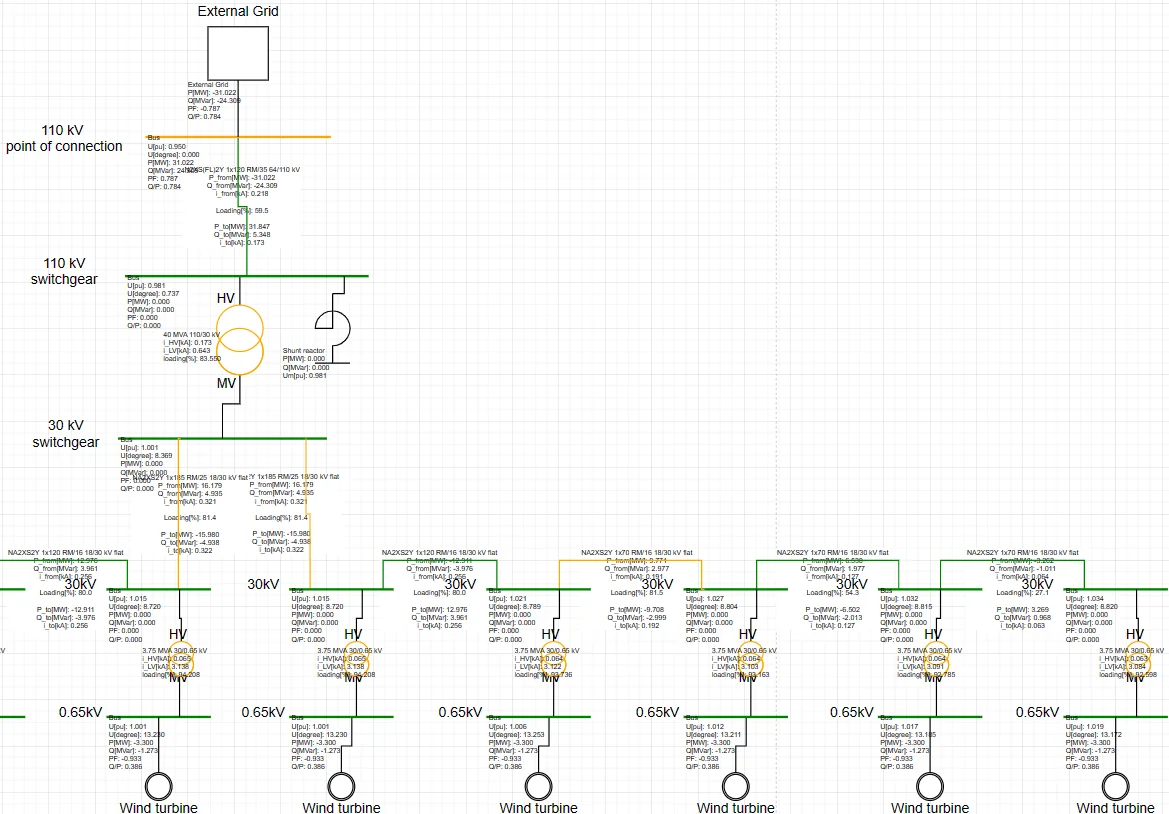
Rev 4 (16.04.2026): three-winding substation transformers, tap-changer control for transformers and shunt reactors, and Q–P curves for wind turbine generators. 1 GW, 100 km export route.
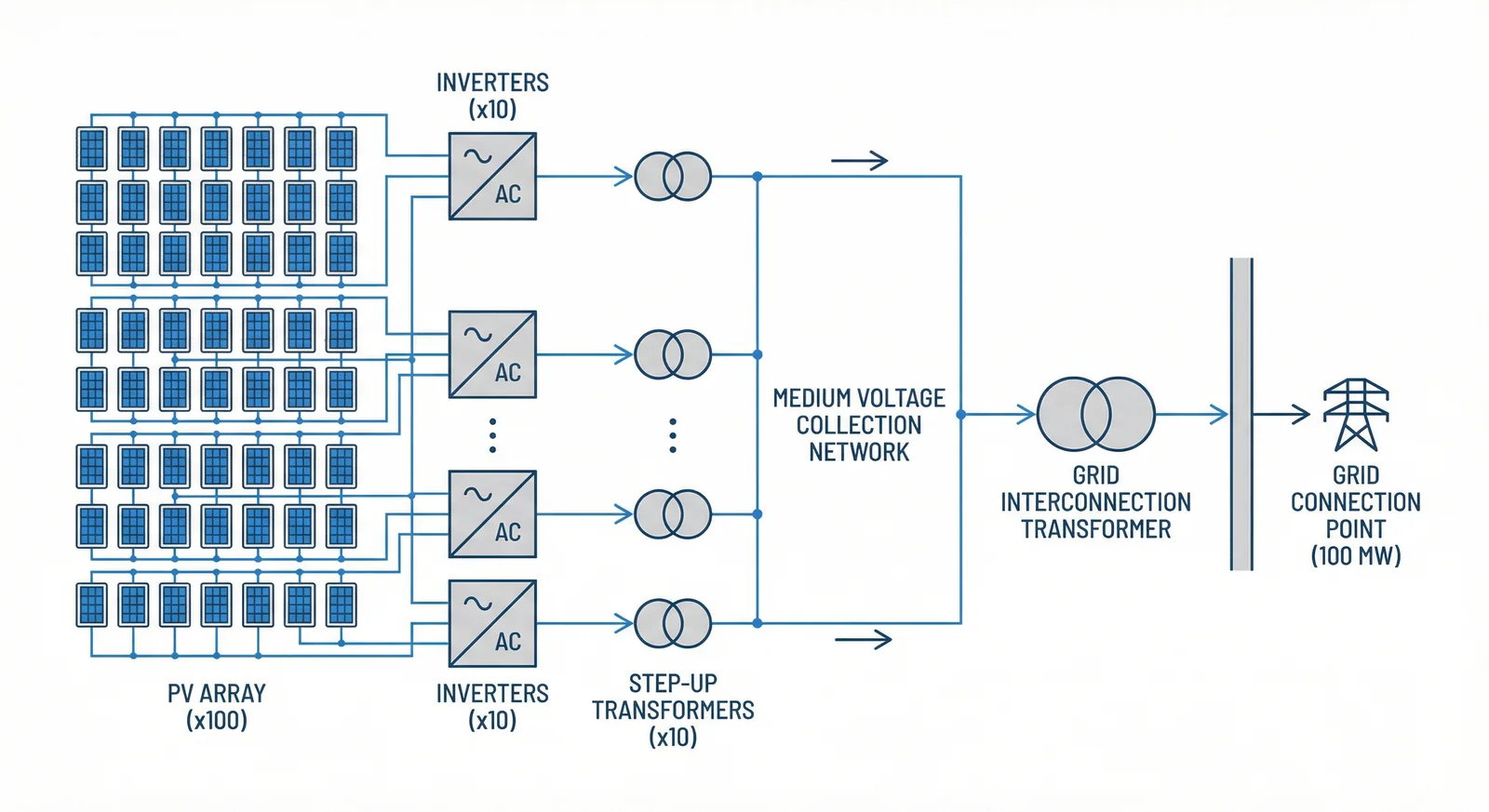
Read MorePhotovoltaic solar farm model with 100 MW rated power for power system analysis and grid integration studies
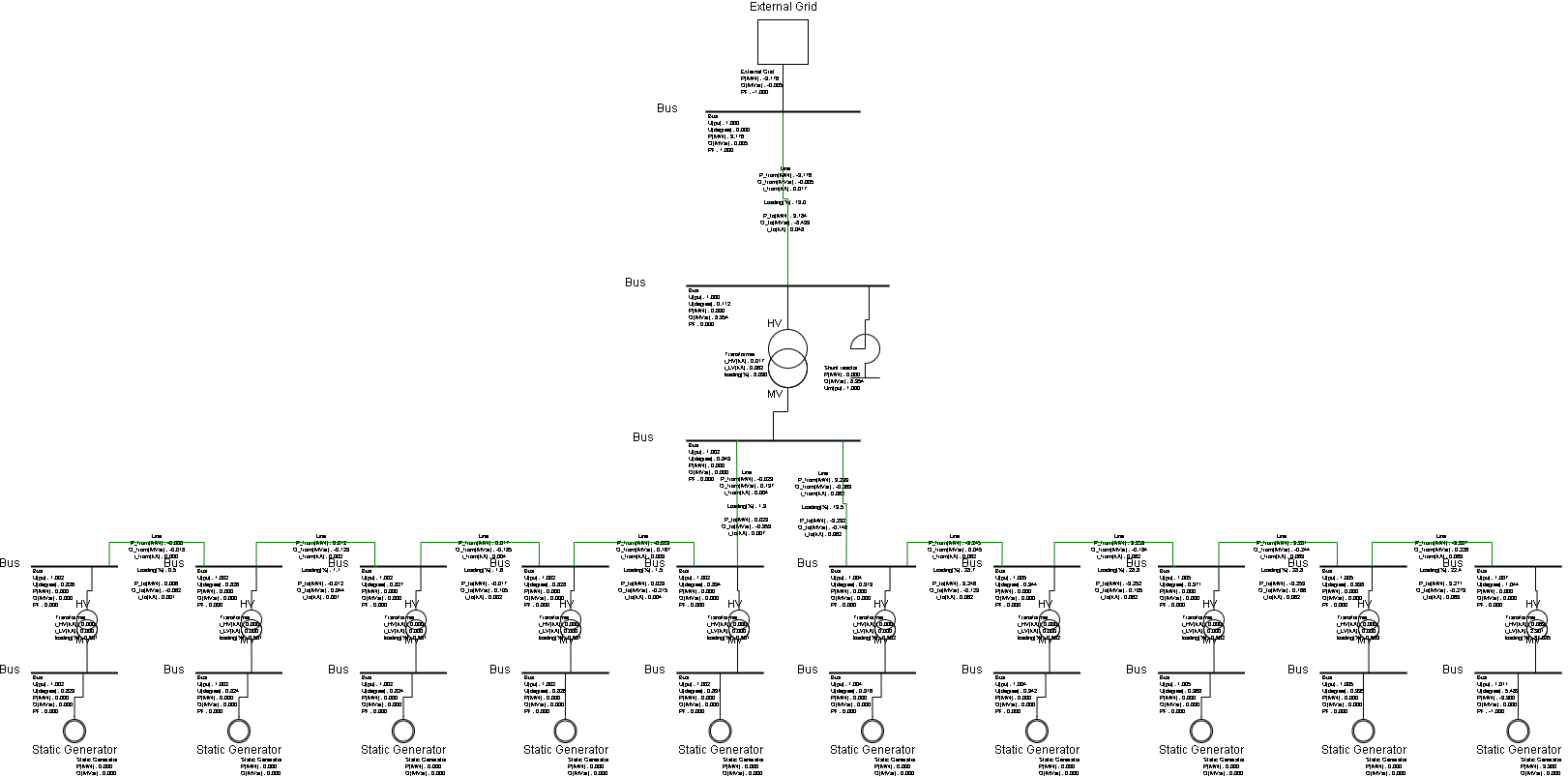
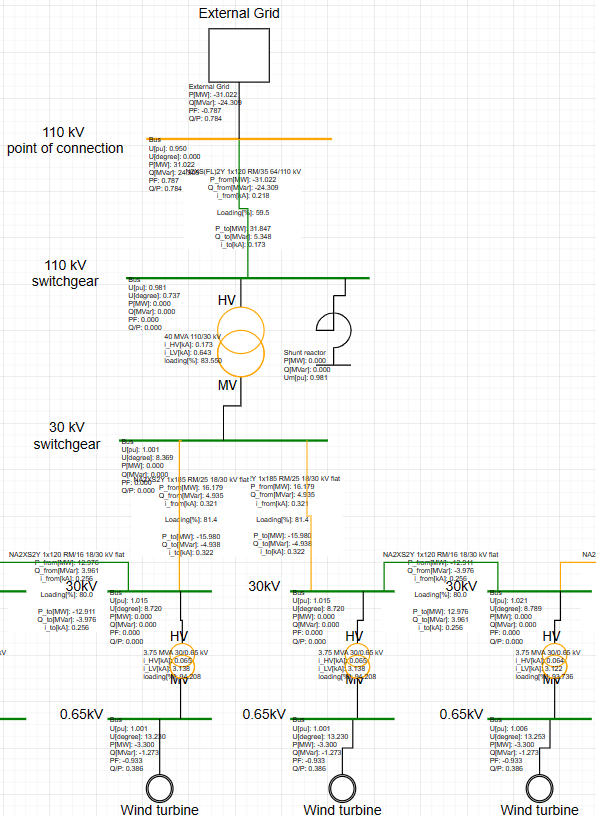
Read MoreOnshore wind farm model with 33 MW rated power, with 110 kV km export cable and 30 kV medium voltage cables
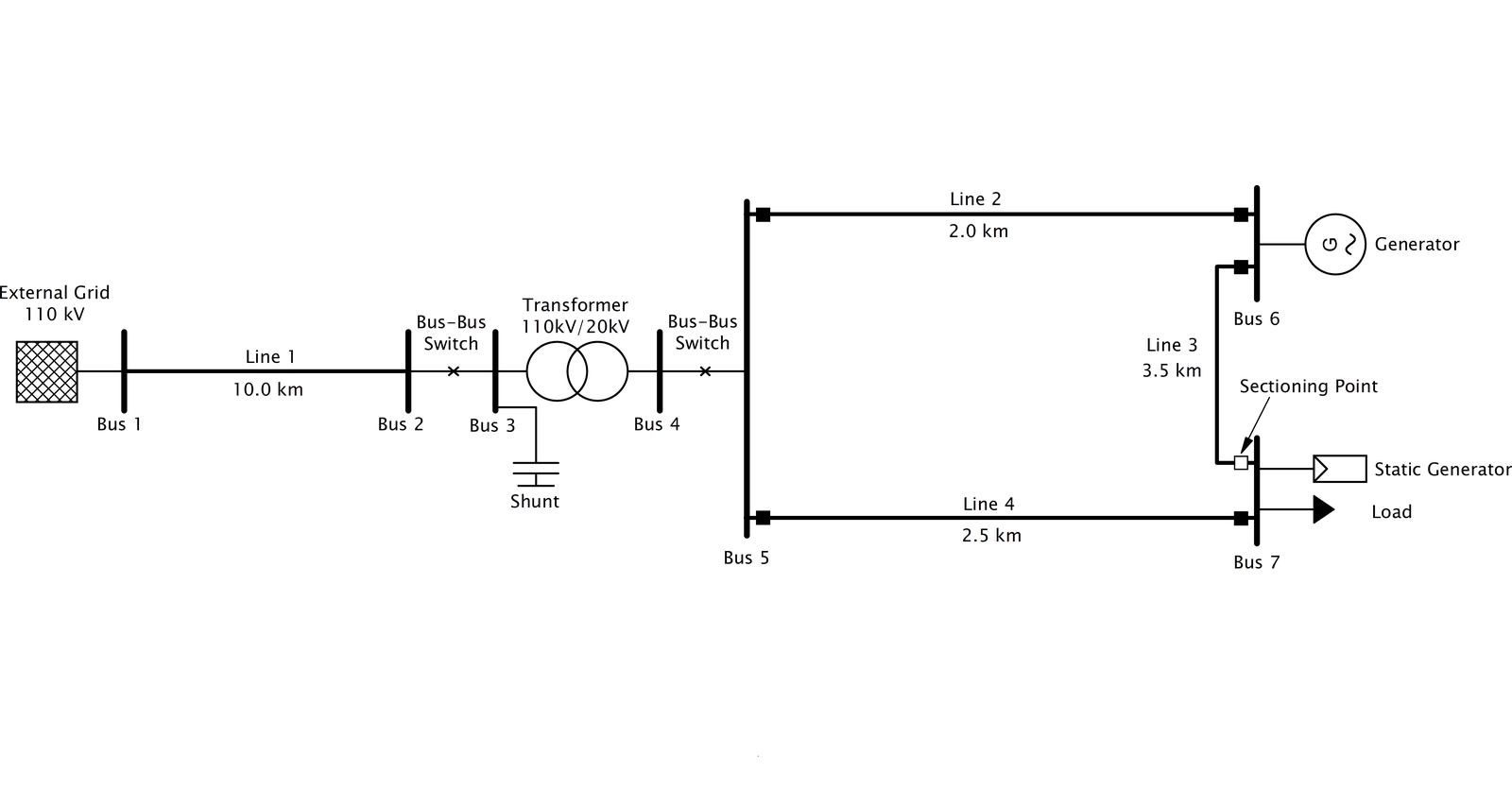
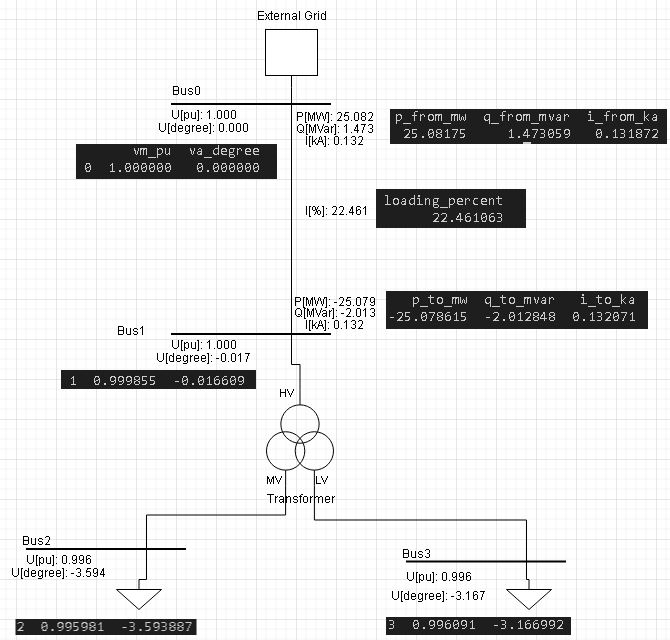
Read MoreIt is a simple example to show the basic principles of creating a network for a load flow and short-circuit analysis.
Read MoreDownload page for the small IEEE examples. The app also includes the larger public cases (14-bus through PEGASE, RTE, Great Britain, Iceland, and the Polish peak). See Diagram templates.
Read MoreCIGRE Medium Voltage network with distributed energy resources (DERs) for power system analysis
Read MoreThe Knowledge Base is used to publish articles on topics related to modeling, simulating and analyzing electrical power systems.
Import the four-bus pandapower opf_basic.ipynb network from a downloadable .py script, then run Simulate → Optimal Power Flow (runopp). Covers import, objectives (poly_cost), and matching the notebook's solver tolerance.
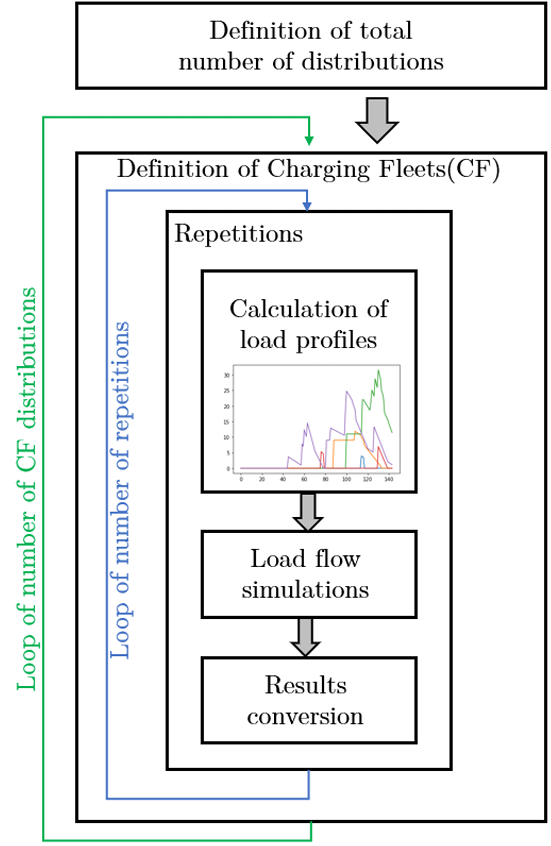
Same SLD, two fault engines: IEC 60909 (ikss, ip, ith), earth-fault vs three-phase duty, and OpenDSS as a cross-check on the built-in onshore wind template.
Read MoreFrom IEC 60909 bolted fault to incident energy, arc-flash boundary, and PPE category — electrode configurations, voltage ranges, and when Ralph Lee applies above 15 kV.
Read MoreSite screening, ANSI pre/post short circuit, and ANDES ride-through checks — with clear out-of-scope notes for WECC/MMWG cases.
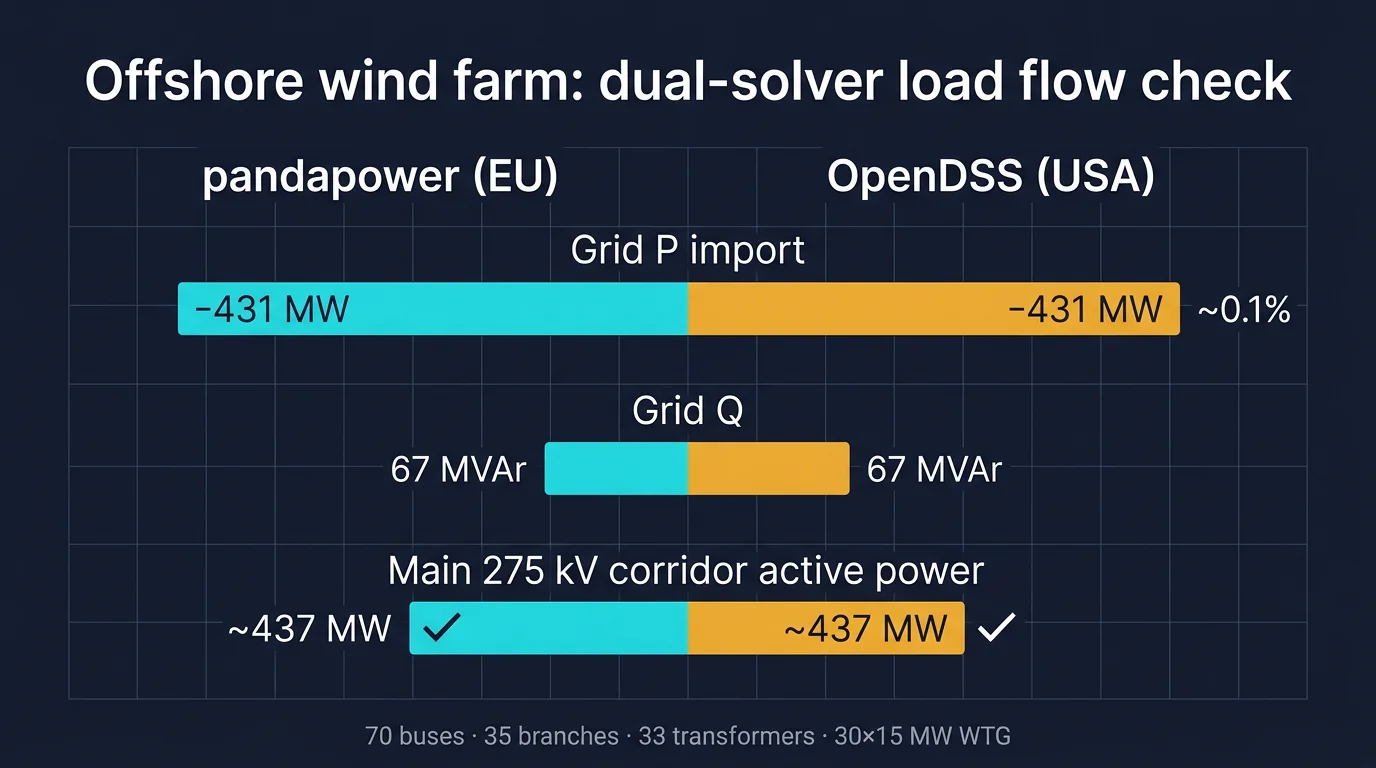
Read MoreSame offshore model run in pandapower (European open-source) and OpenDSS (U.S. EPRI): ~70 buses, 35 branches, 33 transformers, 450 MW wind. Slack power and corridor flows match within ~0.2%; a cross-continental sanity check for Electrisim results.
Read MoreKey improvements in this release: Replaced two-winding transformers with three-winding transformers at onshore and offshore substations. Tap-changer controllers for transformers and shunt reactors implemented. Q–P characteristic curves added for wind turbine generators. See the model page for the Rev 4 download and full changelog.
Read moreStep-by-step article series by Adam Kierad on designing and simulating a 1 GW offshore wind farm electrical system using Electrisim. Covers NC RfG and Polish Grid Code compliance, load flow, short-circuit, FRT, and power quality studies.
Read Article on LinkedInIndependent research from ZHAW shows that pandapower, PyPSA and OpenDSS can match commercial PowerFactory results with an average error below 2%.
Read MoreWhy do load flow results differ between pandapower and OpenDSS? A summary of external grid modeling differences and how to align results using high short-circuit MVA.
Read MoreA comprehensive master's thesis from University of Palermo demonstrates that Electrisim achieves results comparable to commercial tools like Neplan across IEEE test networks and real-world offshore wind farm models.
Read MoreA practical guide to meeting grid code requirements using Electrisim for a 100MW photovoltaic plant connected via underground cable.
Read MoreThe article shows how to specify reactive power compensation equipment for an onshore wind farm to meet the grid code requirements in Electrisim software
Read MoreLearn how to perform short-circuit calculations in Electrisim using open-source libraries pandapower and OpenDSS. Calculate fault currents according to international standards.
Read MoreThe Electrisim software is tested by numerous tests to verify the proper results with pandapower.
Read MoreLoad flow objective and problem, software, input/output data, calculation algorithms
Read MoreLast updated: October 2026
Two pages of formulas and tables for short circuit, transformers, cable sizing, voltage drop, power factor, harmonics and arc flash, plus practical tips and Electrisim updates by email.